In a generation where AI is transforming every industry, success no longer belongs to those who speak one industrial language
but to those who can translate between many…
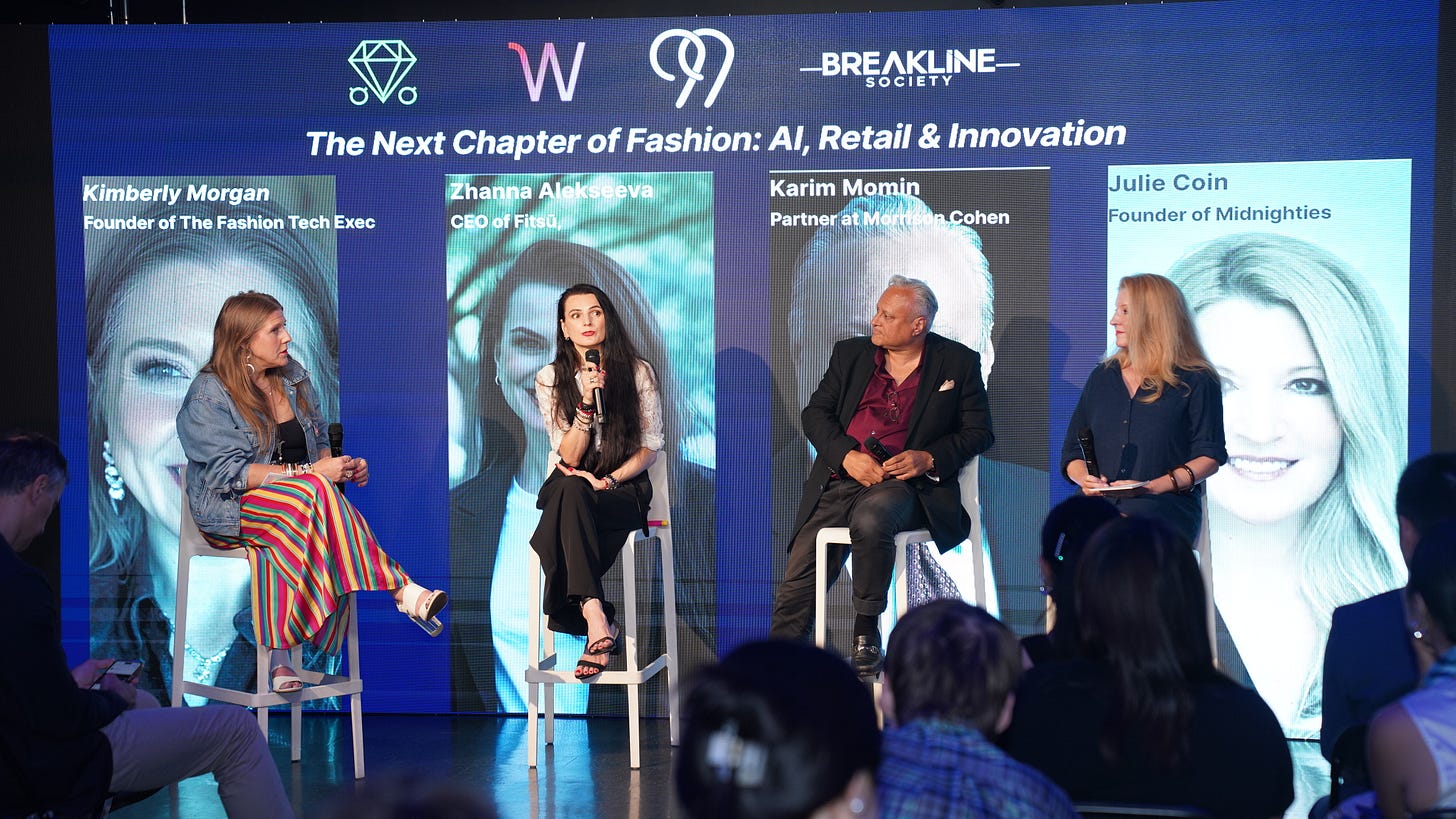
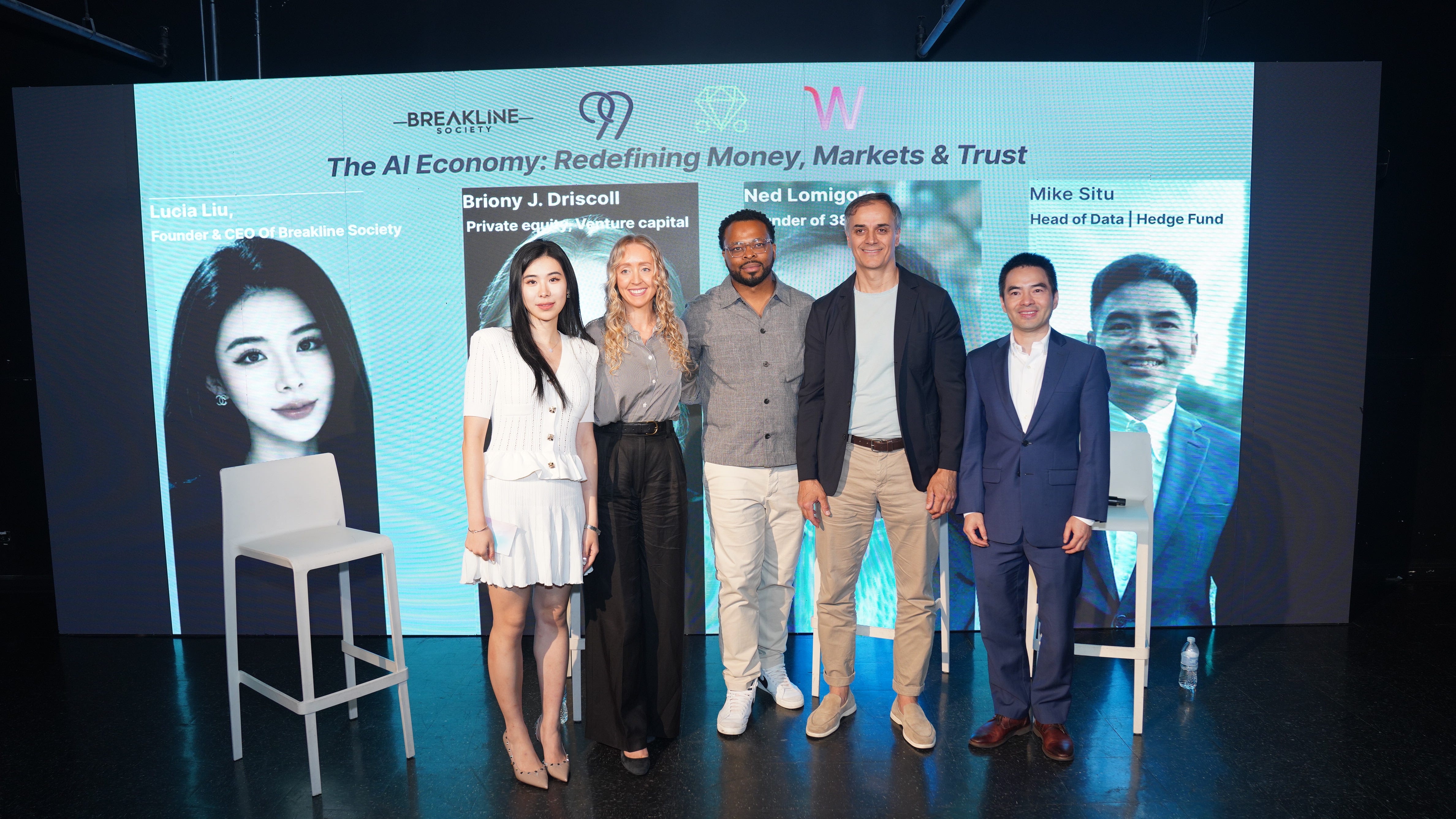
Hosted by Breakline Society, 99 YARDS, Retail Women in Tech (RWIT), and The Fashion Tech Exec, the evening brought together founders, investors, executives, creatives, and technologists to discuss how AI is transforming fashion, finance, retail, and media.
But why do we care?
Fashion, finance, and technology rarely belong in the same room.
Fashion is a world of creativity, culture, and identity.
Finance is a world of markets, capital, and risk.
Technology is a world of innovation, engineering, and infrastructure.
Each has its own vocabulary, its own priorities, and its own way of seeing the world.
Each attracts different kinds of people and solves a different set of problems.
But today, they’re all in one room.
At the conference, I learned that the future of business isn’t being built within industries anymore. It’s being built between them.
Fashion companies are becoming technology companies.
Financial institutions are becoming AI companies.
Retail businesses are becoming data businesses.
Regardless of industry, organizations are asking similar questions:
“How do we build trust?”
“How do we scale?”
“How do we make better decisions?”
“How do we create value in an AI-driven world?”
Can that be the new language of modern business?
The ability to connect ALL
One interesting discussion that popped up: it wasn’t about AI models.
It was about founders.
The conference explored topics like founder equity, governance, legal structure, and fundraising. They emphasized that while AI may accelerate growth, successful companies are still built on strong foundations. Technology can help you build faster, but it cannot replace trust between co-founders, thoughtful leadership, or clear incentives.
AI is becoming a powerful tool, but it’s not a substitute for judgment.
The event itself reflected another shift taking place across industries: the growing importance of community. Behind Setting the Standard is my friend Lucia Liu, founder of Breakline Society, an emerging community of Chinese founders in NYC. Through her background in AI, fashion, quantitative finance, and entrepreneurship, Lucia has built a platform that connects founders, investors, and professionals across industries.
The evening shows that innovation doesn’t happen in isolation — it happens when people from different worlds learn from one another.
This left me thinking more about
translation.
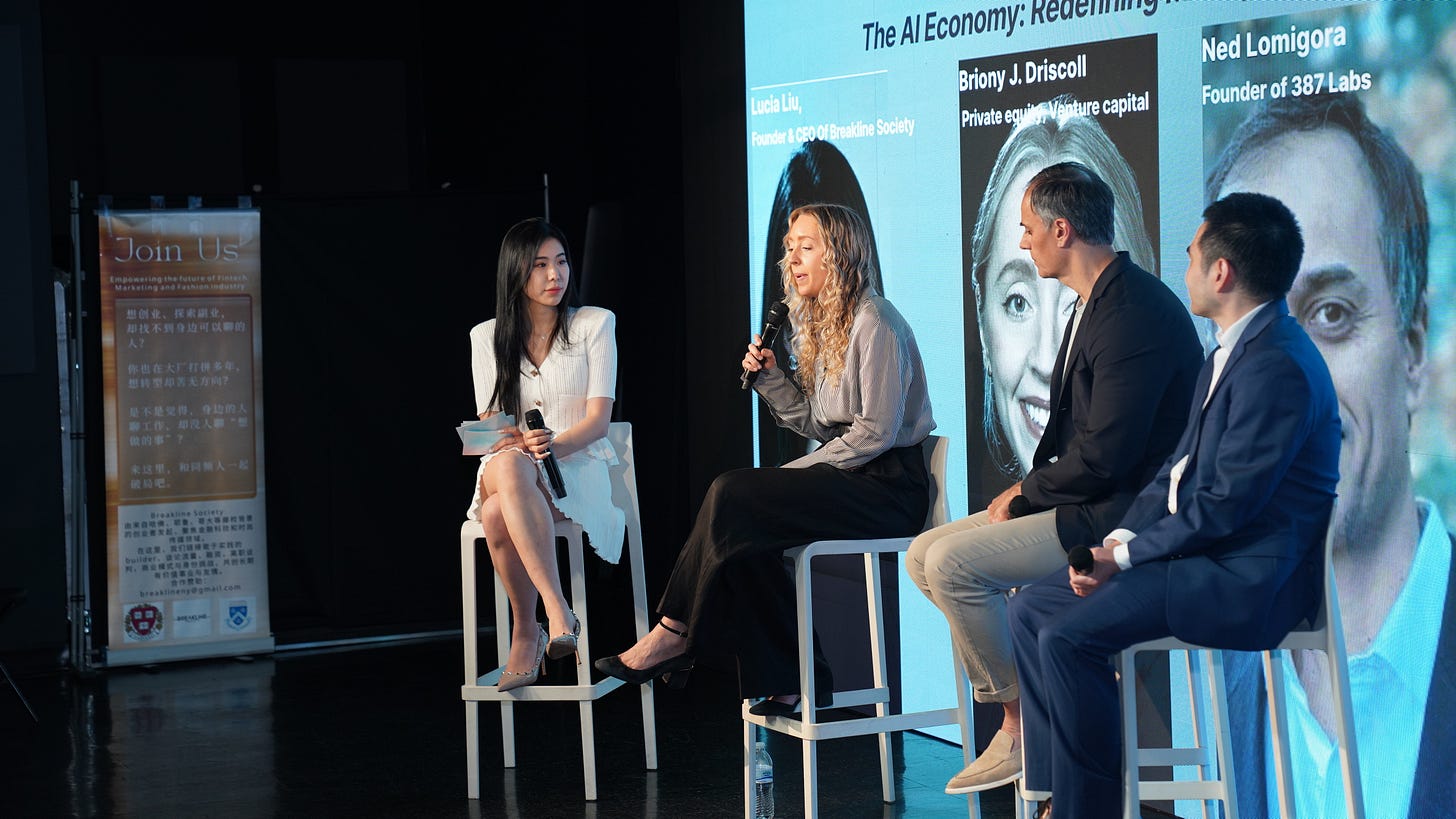
And perhaps AI was simply a catalyst…
The AI Economy Is More Than Just AI
Today, the fashion industry is becoming increasingly driven by data, software, and AI-powered personalization.
Financial institutions are embracing AI to improve decision-making, manage risk, and better serve clients.
Technology is no longer its own sector; it has become the infrastructure connecting every industry.
As the conversation shifted away from product demos and toward the realities of entrepreneurship, investing, and governance, it became clear that AI has lowered the barriers to building software while raising the standard for building companies.
AI adoption is accelerating, but implementation remains complex.
I also want to highlight the gap between technological progress and regulation.
As AI becomes integrated into financial services, retail, and enterprise software, questions surrounding data privacy, intellectual property, liability, and accountability remain far from settled. Technology is moving faster than most legal frameworks, leaving founders and investors to navigate uncertainty alongside opportunity
…
Perhaps,
AI alone is not a competitive advantage.
As foundation models become increasingly accessible, building with AI will no longer differentiate a company but solving problems customers actually care about.
Which means successful AI companies won’t win because they use AI.
They’ll win because they build businesses that people trust.
I think the most interesting innovation wasn’t the technology itself.
It was the realization that the future of business will depend just as much on governance, execution, and human judgment as it does on algorithms.
I think this is the real meaning behind Setting the Standard.
Not setting the standard for AI.
But setting the standard for how we build the next generation of businesses within the AI economy.
Stay curious,
Lorna