
Imagine standing in a room lit by one of the world’s first lightbulbs.
You would probably be staring at the bulb.
History would be staring out the window.
The value of electricity was never the light itself. It was the cities, industries, and institutions that electricity made possible.
How AI Is Moving From Technology To Institution
Every technological revolution has its lightbulb moment — a period when the invention itself captures all the attention.
For electricity, it was the lightbulb.
For the internet, it was the website.
For AI, it may be the model…

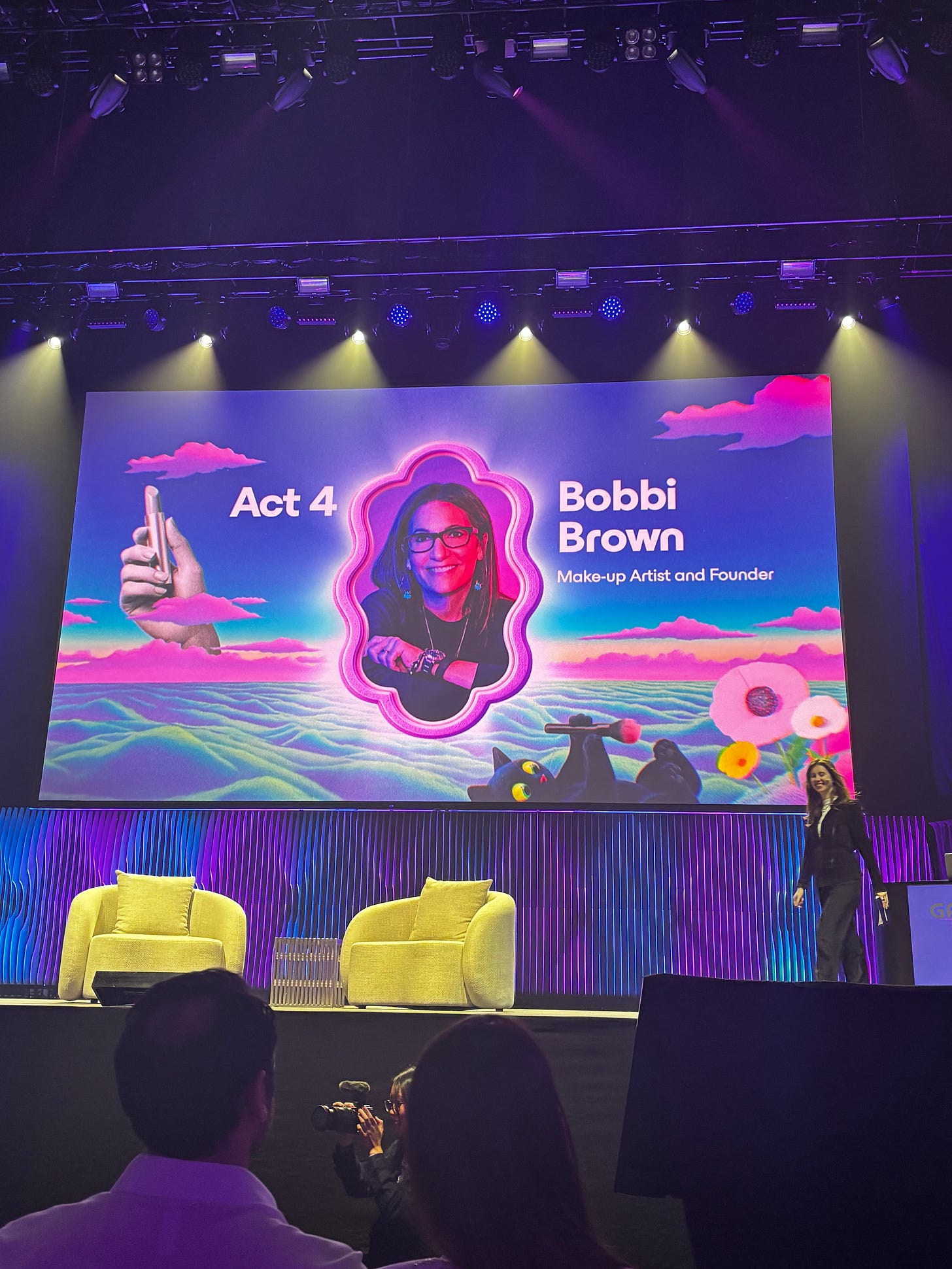
At New York Tech Week, I expected to hear discussions about models, prompts, and the race to build powerful AI systems. But what surprised me was how often speakers talked about something else.
Not the intelligence itself.
But what people were building with it.
Nicole Treiman, President of Hospitality Services at Bilt, described a future where AI disappears into the customer experience. Rather than acting as another chatbot, Bilt’s AI concierge helps users pay rent, transfer points, book travel, and navigate an increasingly complex platform. In her vision, AI becomes less visible as it becomes more useful.
Another founder described AI as a force dramatically lowering the cost of creating software. Businesses that could never afford a development team may soon be able to build custom tools tailored to their own operations. The technology itself matters less than the new possibilities it unlocks.
Later in the day, Graphite CEO Merrill Lutsky described a future where software is built, tested, reviewed, and monitored by networks of agents. Yet even in that future, he argued that alignment, communication, and human judgment remain essential.
Three different companies.
Three different products.
Yet they were all describing the same shift.
AI is moving from product to infrastructure.
And when infrastructure becomes commonplace, attention shifts elsewhere.
From Infrastructure To Superstructure
The word “infrastructure” is often used to describe the foundations upon which society operates.
Roads.
Railways.
Electricity.
The internet.
…
Most people rarely think about them, yet modern life depends on them.
The most successful infrastructure becomes invisible. No one wakes up excited to use electricity. They care about what electricity allows them to do. And the same may become true for AI.
Consumers are unlikely to remain loyal to a particular model. They will be loyal to the services, institutions, and experiences that help them solve problems.
This is where the idea of superstructure becomes useful: If infrastructure provides the foundation, superstructure describes everything built above it: businesses, institutions, markets, organizations, and ways of life.
Electricity enabled factories, skyscrapers, and modern cities.
The internet enabled Amazon, Airbnb, Google, and entire digital economies.
The question is NOT whether AI will become infrastructure.
The question is what kind of superstructure will it become.
Perhaps, the most important AI story may not be the technology itself. It may be what society builds once intelligence becomes a necessity.
Manufacturing Intelligence

One phrase continued to linger in my mind.
Borrowing from Nvidia CEO Jensen Huang, one speaker described AI as the ability to “manufacture intelligence.”
At first, it sounds strange.
Factories manufacture cars, steel, and computer chips.
And intelligence has always seemed different — something developed through education, experience, and human effort. Yet today’s data centers are beginning to scale cognitive work itself. They can generate code, analyze information, write content, and assist with decision-making.
For the first time, intelligence is becoming abundant.
Just as the Industrial Revolution expanded humanity’s capacity for physical labor, AI may expand our capacity for cognitive labor.
AI is becoming less of a product and more of an infrastructure — something that quietly powers everything built on top of it.
The New Scarcity — Judgement
Perhaps the most surprising theme was how little speakers talked about intelligence.
Instead, they focused on
Judgment.
AI can generate and validate work, but humans still decide what to build and why. It can produce outputs, but not conviction. As development becomes automated, human coordination and decision-making matter more.
The paradox is clear: as intelligence becomes abundant, judgment becomes scarce.
As execution gets cheaper, direction becomes more valuable. As software gets easier to build, knowing what to build matters most.
The bottleneck shifts, and so does value.
Beyond the AI Boom

The conversations at NYTW left me with the sense that we are approaching a transition.
Today, we are captivated by the technology itself. That is understandable. Every technological revolution begins this way.
People once obsessed over the lightbulb. Eventually, they talked about cities.
People once obsessed over websites. Eventually, they talked about businesses.
Perhaps one day, people will stop talking about AI and start talking about the institutions it made possible.
The models are fascinating. The infrastructure is transformative.
But the most important story may not be the intelligence itself. It may be the superstructure that emerges above it.
The lightbulb was never the story.
The city was.
Thanks for reading The Meridian! This post is public, so feel free to share it.